Category: Health

  • 5 Challenges of Adopting a Gluten-Free Diet

    5 Challenges of Adopting a Gluten-Free Diet

    Like anything else you do in life, when you start something new, you will face challenges. That even applies to adopting a gluten-free diet. Perhaps you are starting the diet because you’re gluten intolerant or wheat sensitive, or maybe you’re just trying to live a healthier life and even lose weight.

    Whatever the case may be, you’ll encounter one or several of the challenges listed below. Knowing what they are will help you be aware of them when they arise, and you’ll know how to overcome them.

    5 Challenges of Adopting a Gluten-Free Diet
    1. Adopting the diet into your lifestyle
      Just like any diet you start, there is going to be a transition phase where you need to grit your teeth and have self-discipline and just get through it. If it’s the Keto diet or any low carb diet, you’ll need to drastically cut your carbs. If it’s the paleo diet, several foods such as sugar and refined oil are no-nos.

      With the gluten-free diet, you’ll need to avoid foods containing gluten. Just knowing what these foods are will be half the battle. You will need to do your research and understand which common foods you are consuming may contain gluten. Ketchup for example or even soy sauce.

      Initially, you may find it difficult to give up several of the foods that you’re accustomed to eating such as burgers (because the buns contain gluten) and ice-cream, cakes, cookies, and donuts etc. If you want to keep eating these things, you will need to find gluten-free substitutes to eat and that can be somewhat difficult. This period alone is somewhat inevitable and can be challenging.
    2. Nutrition deficiencies
      When people give up too many foods during a diet, especially so many things containing gluten, nutrition deficiencies can come up. While avoiding gluten in their diet, they also inadvertently do not get various vitamins and minerals the body needs.

      The best way to get around this problem is to get a multivitamin that contains a variety of vitamins such as vitamin A, vitamin D, iron, fiber, etc. The supplements will have to pick up the slack created by the eliminate of foods in the diet.
    3. The risk of cross-contamination
      If you’re the only gluten-sensitive person in the house, the rest of your family members may not be on a gluten-free diet and eating things you can not eat. That will mean the risk of cross-contamination is higher in your household.

      For example, if your spouse uses the bread knife to spread the butter on her bread, she may unknowingly leave minute crumbs on the butter. If you use the same butter on your gluten-free toast, the crumbs that contain gluten will enter your system and you’ll feel the effects later.

      So, having separate utensils, cookware, and even special meal preparation areas may be necessary. It goes without saying that all of this precautions requires extra effort and it can be challenging at times to have to make special arrangements just to maintain a gluten-free diet around people who can eat anything they want.
    4. Gluten sneaks into the diet
      In case you didn’t now, Gluten doesn’t only appear in foods. It’s a very common and highly versatile ingredient. Because of its viscoelastic nature, it is often found in a wide variety of other things. For example, lick a stamp to use it on a letter? Guess what? The adhesive side may contain gluten. Most people have no idea gluten shows up this way.

      Using lipstick? It may contain gluten too. Since it sneaks into many products, being extra vigilant is imperative so that you can ascertain where the gluten is coming from. Even shampoo and conditioner can have gluten unless you specifically use something that is gluten-free.
    5. Eating out is a hassle:
      When you must avoid gluten in your food, it becomes quite difficult to eat out because in most cases, you are not in control of the food preparation or the ingredients that go into the food.

      Sure, you can give the chef special instructions, and ask many questions about ingredients but sadly, cross contamination can occur.

      In some cases, the restaurant may not even be able to prepare dishes according to your requirements because they don’t have room to have a dedicated area to gluten-free meals preparation.

      So, you may find yourself limited in the places you can find gluten-free meals. If you’ve been through this, you know how this can put a damper on eating out with friends. It can be quite difficult. You either don’t eat much, ask a million questions, or you take a chance you get glutened.
    5 Challenges of Adopting a Gluten-Free Diet

    Sadly the challenges listed above are very real, quite common and encounters those who must eat the gluten-free diet must live with daily. Depending on your reasons for choosing to follow this particular diet, it may be crucial to your health you be 100% gluten-free. Or perhaps, you are one of those who can be more flexible every now and then if you’re not severely gluten sensitive.

    If you must adhere to a diet free of gluten, try to maintain a positive attitude and accept this new way of life and lifestyle. Once you get familiar with foods and products you must avoid, you’ll find it easier to avoid the foods you can’t eat and find things that satisfy your appetite.

    5 Challenges of Adopting a Gluten-Free Diet

    I you have enjoyed this article, leave us a comment below. You can also contact me with any questions or comments you may have.

  • What Health Issues Might You Experience If You’re Gluten Intolerant?

    What Health Issues Might You Experience If You’re Gluten Intolerant?

    Are there health issues you might experience if you are gluten intolerant? One specific illness called celiac disease is one adverse immune reaction that occurs in a person’s body when they consume foods that contain gluten. This gluten is a protein that’s found in foods like wheat, rye and barley.

    If you happen to have celiac disease, there are several health issues (symptoms) that can arise if you eat foods you should not eat. While not everyone is affected by celiac disease, you can still be gluten intolerant without being diagnosed as celiac. This basically means that you will experience similar symptoms, but perhaps just not as severe.

    Sadly, statistics are showing that more and more people are becoming intolerant to gluten and the problem is growing. Some studies show this increase could be due to the increased common use of genetically modified wheat in so many of the foods we eat today. Honestly, the jury is still out on this theory, and it depends on who you talk to, but what really matters is that you are aware of potential issues and recognize the different symptoms and know how they affect you and your health.

    Since many of the symptoms you might feel resemble other normal issues, it’s easy to overlook the symptoms that you may experience every now and then.

    Another common misconception is that gluten only affects your digestive system when in reality, many people experience a variety of symptoms like skin rashes, eczema, and headaches. Many times, these symptoms are a result of gluten intolerance. In the rest of this article, we’ll look at some of the issues that come up.

    Gluten Intolerant?
    • Digestive issues
      This issues is probably the most commonly experienced and most obvious. When you eat something your body doesn’t tolerate, you’ll have symptoms. For many who are gluten intolerant they may experience things like being bloated, they might be gassy or even experience abdominal cramps. Many times, even diarrhea is a common and uncomfortable problem.

      On the surface, the symptoms mentioned here might seem fairly harmless and just create discomfort for you. Unfortunately, there could be more serious issues happening like inflammation of the lower intestine and it not functioning properly.

      When a body is inflamed and not working properly, you are not able to absorb the nutrients from food your body needs. Besides that, a persons stools may become looser creating an urgent need to use the bathroom several times a day to empty the bowels. If this happens too much, it becomes an issue with staying hydrated from the loss of fluids on a daily basis.

      This particular symptom really depends on how a persons body is reacting to the gluten. Some may have just the digestive issues, in other cases, the sufferer may experience acid reflux and heartburn.

    • Mental problems and nerve issues
      As if digestive issues weren’t enough, some people experience headaches, fogginess and even numbness in extremities and these can be symptom of celiac disease. The headaches can be strong and recur often. Believe it or not, eliminating gluten from the diet can be one of the best ways to get rid of the headaches.

      As for numbness and tingling in the hands and feet. It’s hard to imagine this could be related to what you eat (gluten) but if you seek to have some improvement, you’ll need to eliminate gluten from your diet for these symptoms too.

      Sidenote: If you are experiencing numbness and tingling in your hands and feet, it’s best to speak to your doctor soon because it could be a sign of other health issues. Getting your doctors professional medical opinion is highly recommended.

    • Skin, hair and other problems
      This was my first sign that let me know I had to avoid gluten in my diet. Keratosis pilaris, dermatitis herpetiformis and rashes are all linked to gluten intolerance. The rashes are most often found on joints like elbows and even the back of the knee. Eczema and rashes might even show up on your scalp, forearms and back too.

      If you are experiencing rashes, they may come and go depending on what you eat, but if you want them to disappear permanently, you’ll need to get on a gluten-free diet and stick to it.

      For me personally, I can tell almost immediately that I’ve eaten something with gluten. My scalp starts itching, my skin itches, and I get a burning rash behind my ears – yep, behind my ears.

      Here’s something I did NOT know. Besides skin problems, gluten intolerance can lead to hair loss too. And as if everything I have already mentioned is NOT enough, you can experience joint pain, mouth ulcers, fatigues, memory problems, bruising, and so much more. These are all symptoms of Celiac disease.

      Besides the complications of celiac disease, you are also at risk for heart disease, cancer, lung problems and even infertility is affected when you’re gluten intolerant but you keep eating it.
    What Health Issues Might You Experience If You're Gluten Intolerant?

    By now I hope you’ve realized that gluten intolerance is one of those health issues that seems harmless on the surface to some people and only has uncomfortable symptoms… but if you don’t stop it in its tracks and keep ingesting gluten, it can lead to severe and debilitating, dangerous health problems. Is something you eat really worth that in the long run?

    Look, I’m preaching to the choir. I am guilty of continuing to eat things I know I shouldn’t all because I crave it only to wake up the next day wondering why I didn’t just say no. I’m still working on it.

    I am not celiac, but if you are diagnosed with celiac disease or you’re non-celiac gluten intolerant like me, please consider taking immediate steps to just eliminate gluten from your diet. You’ll protect your health, hopefully undo some damage, and you will just feel so much better.

    What Health Issues Might You Experience If You're Gluten Intolerant?

    If you have enjoyed this article, let me know in the comments. I’d love to hear if you have issues with gluten. Questions, please feel free to contact me.

  • What Is Gluten and Why Is It Dangerous for Many?

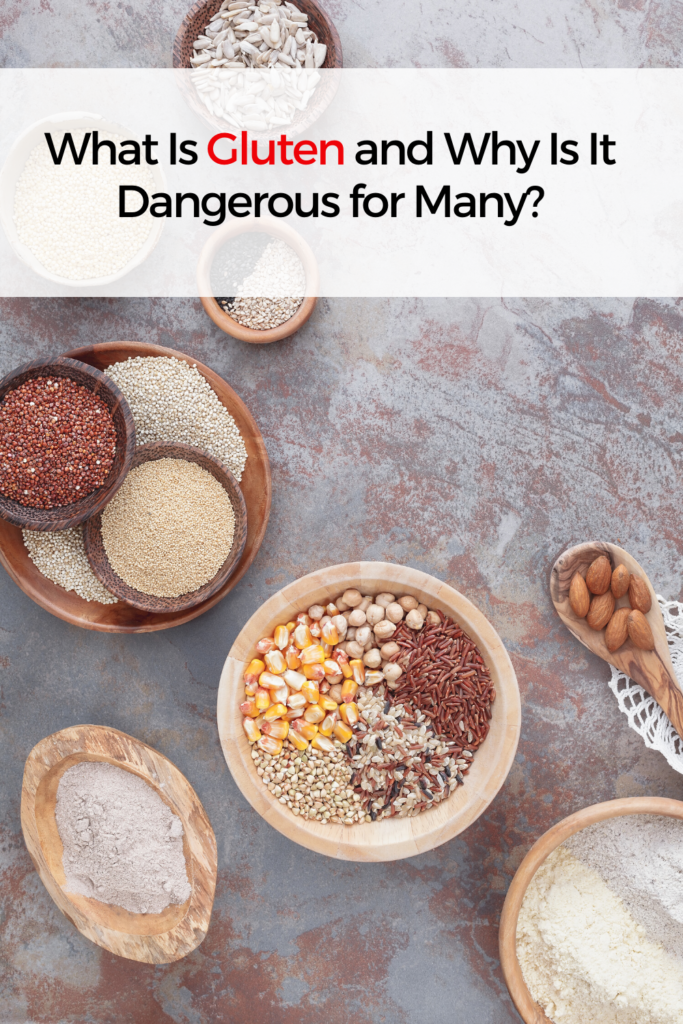
    What Is Gluten and Why Is It Dangerous for Many?

    Over the last few years, Gluten has developed a very bad reputation. With increased discussions about genetically modified foods, pesticides and many other issues, a lot of fallacy is being shared as fact.

    Simply put, Gluten is NOT a bad thing for most people and it only has negative affects those who are sensitive to it. Those with gluten or wheat sensitivities have legitimate reasons to avoid eating it.

    There has been a lot in the media over the years about genetically modified food and the effects of eating GMO, but that is a separate issue.

    gluten sensitive

    “There’s no question that celiac disease is on the rise, and non-celiac gluten sensitivity may be, as well. Some people have suggested that genetically modified wheat—also known as GMO wheat—might be to blame for these increases.” Source

    There have been people who have been sensitive to gluten for centuries. Some people have a problem with it, others do not.

    So What Is Gluten: Gluten itself is a protein composite that is found in foods like barley, wheat and rye. According to the Mayo ClinicGluten is a protein found in most grains. The gluten found in wheat, barley, rye and triticale (a cross between wheat and rye). While other grains such as corn, rice and quinoa also contain gluten, they don’t seem to cause the same problems as wheat, barley, rye and triticale.”

    When Gluten is stirred in hot water water, the viscoelastic nature of it creates a sticky, slightly gooey consistency that makes for a great thickening agent. Because of this main characteristic, many processed food manufacturers use gluten as a thickening agent in their foods to bind the ingredients together.

    The truth is, most processed foods contain gluten in some form or another. Even Ketchup has gluten (wheat) in it and something as common as beer, created from barley, also contains gluten. If you have a gluten or wheat sensitivity, you should avoid anything that contains it. This is why reading all labels and knowing all ingredients is crucial.

    What makes Gluten a bad guy?
    Gluten is an issue when you are a person who is sensitive to it. Those suffering from Celiac disease are not able to process the gluten in the food which cause problems like inflammation in the small intestine.

    Many gluten sensitive people will have stomach issues as well due to the swelling and inflammation created by the gluten sensitivity. Sensitive people experience all kind of physical reactions like: Abdominal pain, diarrhea, bloating, hives, weight loss, and more.

    As you can imagine, suffering physical symptoms like this are why gluten sensitive people must eliminate it from their diet. If you’ve ever tried to avoid gluten, you know what a Herculean task this might be. No matter how difficult, it really is necessary.

    In many instances, preparing meals at home, studying nutrition, and taking supplements are advised. Depending on how one chooses to eat, a gluten-free diet might cause nutrient deficiencies so you’d be advised to take supplements.

    Label reading: Gluten can show up in foods you’d never imagine and you’ll need to be more aware or risk getting “glutened.” You must become a label reader and get to know the ingredients you see on a label.

    I for one have found that the few ingredients, and the more natural, the better. Keep is simple. Raw and natural are the best. (think veggies and fruit)

    Dining out might end up being more of a challenge too. I for one have never studied a menu as hard as I do now because I have to work very hard to avoid gluten (wheat), dairy and eggs. Sadly, this is real life. You work hard to avoid gluten or you suffer the consequences and the only way your body can heal, is to eliminate it completely from your diet.

    There have been times when I consciously make a choice to eat something I know I shouldn’t, with the awareness that for the next 1-2 days, I’ll be paying the price. (note: I am not diagnosed Celiac, just wheat sensitive)

    As more and more people become aware of the fact that gluten may be the reason for various health issues, gluten continues to get a bad rap.

    In today’s world, the internet has made the world a smaller place and people are now more aware because they hear about it, read about, and can research easier than ever before.

    I discovered my wheat sensitivity almost by accident while visiting my chiropractor. I was having a lot of knew and back issues and I noticed I felt worse when I ate certain things. I just happened to ask my chiropractor if it was possible that certain foods could make my back hurt. He did a test, and yep…sensitive to wheat.

    When I don’t eat gluten (wheat), my neck, back and knees don’t hurt so much.

    Now, I can’t put the blame on it for sure, but gluten sensitivity is on the rise and many feel that GMO wheat may be to blame. I lived most of my life with no issues, but after moving to Kauai where GMO exists and higher use of pesticide than when I lived in Vegas, I developed sensitivity to wheat. Studies are still being done to determine if GMO wheat, and glyphosate are major contributors.

    “Published in the journal Interdisciplinary Toxicology, the study begins by proposing that “glyphosate, the active ingredient in the herbicide, Roundup, is the most important causal factor” in an increase in celiac disease and gluten intolerance worldwide.” (SOURCE)

    For the time being, if you often experience physical symptoms mentioned above like abdominal issues, skin rashes, or even headaches for no explainable reason, you might be gluten sensitive.
    Try eliminating gluten from your diet for a month or two and see if the symptoms disappear and if you feel better. If so, you could be a non-celiac gluten sensitive like myself. In that case, now you know it’s best to minimize or eliminate gluten intake from now on.

    What Is Gluten and Why Is It Dangerous for Many?

    If you’ve enjoyed this article, leave me a comment and tell me your experience with Gluten. You can also contact me with comments or questions.

  • Achieve a Balanced Diet by Juicing Even Just Once a Day

    Achieve a Balanced Diet by Juicing Even Just Once a Day

    One of the newest health trends is a juice fast, which can be fun for adults and kids alike. Juicing can be a great way to make sure you get enough fruit and vegetables in your diet, but it also can be a good way to cleanse and maintain a healthy lifestyle. Since so many people are now adding juicing to their daily menu, here are some tips that can help you make the most out of your juicing experience.

    How often should you cleanse? Depending on your situation, it depends on how often you need to cleanse. In some cases, it might be more convenient to cleanse a few times a week or more. If you cleanse frequently, you might even consider scheduling an appointment with your health care provider to help you figure out when to cleanse regularly.

    Achieve a Balanced Diet by Juicing Even Just Once a Day

    An important thing to remember when cleaning is that there is no single cleanse that is right for everyone. The best cleanse is the one that works best for you. You should discuss any cleanse with your health care provider to determine the best cleanse for you.

    In a juice fast, the focus is not on eating only fresh, unprocessed whole foods. It is about adding more fruits and vegetables into your diet, while at the same time cleansing the body with fiber and other beneficial ingredients. Cleanse naturally to make sure your body is getting all the nutrients it needs.

    For juice fasts, using fruit and vegetables as much as possible is a good idea. This keeps the juice fresh and gives the person a flavor boost. A smaller serving size will allow juice fasting to continue for longer periods of time.

    Did you know that some drinks have high acid content? Too much of it can be hard on the stomach. These drinks also can make people gag. Don’t drink too much of these to start with.

    For a home juicer, there are two types of juicers. The first is the pure press juicer. These juicers aren’t equipped with a strainer. The pulp is squeezed through a single strainer, which means that you will waste more juice if you make mistakes.

    You should try to keep your pure press juicer clean, though. Don’t use any harsh chemicals or harsh cleansers on your juicer. Be sure to purchase a juice bag that isn’t too large, so that the bag won’t be able to trap the juice in the machine.

    Do you hate the water taste from the juicer? The only way to eliminate this problem is to purchase a juicer that has an automatic pulp extractor. This uses a second water reservoir so that you don’t have to purchase additional water to keep the pulp from getting stale. When the pulp is ripe, you can reuse it.

    Achieve a Balanced Diet by Juicing Even Just Once a Day

    If you’re new to juicing, you may find that the best juicer for you is the simple press juicer. These juicers don’t have many moving parts and can make larger batches of juice faster. These machines are easier to use and they can also be washed and reused without losing juice.

    When you start juicing, remember that you’ll want to use a small amount at first to help you get used to the taste of the juicing process. If you feel comfortable using a juicer without adding any excess water, increase the amount of water to use at first. Even though it is recommended that you drink plenty of water throughout the day, juicing just once a day should make up for the loss of water and fiber in your system.

    Achieve a Balanced Diet by Juicing Even Just Once a Day

  • Read This Before You Decide to Proceed on That Weight Loss Surgery

    Read This Before You Decide to Proceed on That Weight Loss Surgery

    Weight Loss Surgery: Preventing the Health Risks

    If you have been watching your weight go up and you are worried about the rising pounds, you may be wondering whether weight loss surgery really works. Is it possible to prevent future weight gain by putting yourself on a well-known weight-loss surgical operation?

    Today, weight loss surgeries are gradually gaining recognition when it comes to losing weight. Many health experts contend that people who are excessively overweight or has slower metabolism would normally require some surgical operations.

    Surgery at Present

    The greatest progress in the care of the surgical patient has taken place since the beginning of the present century. An increasing knowledge of disease and disorder as a result of research has permitted the development of many diagnostic aids. Some of these depend upon roentgenograms, laboratory procedures such as chemical, bacteriologic, and pathologic determinations, as well as monitoring devices and computer aids.

    Hence, the result is that the diagnosis of disease and disorder is made with more exactness and certainty than was possible from the simple clinical examinations of previous days.

    That is why people who wish to undergo weight loss surgery should no longer be afraid of the procedure because high clinical standards are now being implemented in every surgical operation.

    The Concept of Weight Loss Surgery

    Health experts contend that weight loss surgery is a major surgery. One of the most common reasons why people would like to lose weight is to enhance their physical attributes. However, it should not be the underlying motivation that they should undergo the process of weight loss surgery.

    What people do not know is that weight loss surgery is especially generated to help obese people live longer, healthier, and better.

    That is why it is important for an individual to meticulously analyze his or her situation, do some research about the process, and analyze if weight loss surgery is the ultimate choice for his or her physiological condition.

    Moreover, it is important to gather further information about weight loss surgery by consulting an experienced and knowledgeable bariatric surgeon or even just an expert family physician who knows the ins and outs of weight loss surgery.

    In addition, the patient should also consult the other health experts such as the psychiatrist and dietician with regards to some psychological advices on long-term goals after the operation.

    Generally, patients who have undergone weight loss surgery are said to be successful if they were able to lose 50% or more of their extra body weight and will be able to maintain that condition for the next five years or so. However, the results of the operation may still vary depending on the clinical information of the patient, and the skills of the bariatric surgeon.

    Normally, the patient will be able to lose at least 30% to a maximum of 50% during the first six months after surgery; and within the year after the operation, the patient has the potential of losing weight up to a maximum of 77%.

    Best of all, people who were able to lose weight through surgical operations can actually maintain a continuous weight loss of up to 50% to 60% in the next 10 to 14 years after surgery.

    Factors to Consider

    As with the other weight loss management programs, there are many factors to consider before the patient should decide to undergo weight loss surgery.

    Consequently, the actual weight that will be lost is reliant on the weight before surgery, surgical procedure, patients age, capability to exercise, total health condition of the patient, dogged determination to maintain the necessary follow-up nurture, and the enthusiasm to succeed with the help of their family, friends, and their colleagues.

    If you have just put on a few extra pounds and want to avoid gaining more, these weight loss surgeries for better health may seem convincing. But, in addition to being convinced, you may also have to take some action to ensure that your weight does not creep upward.

    Therefore, it can be concluded that losing weight is not just a question of deciding to be strong-willed and determined or upbeat and positive. Lifestyle changes are where it is at for long-term success with your weight, especially after weight loss surgery.

  • How Safe Are Low Carb Diets?

    How Safe Are Low Carb Diets?

    Whether you’re in a grocery store, a restaurant or just watching the commercials on TV during your favorite show, you are bombarded with ads and special menus singing the praises of the virtues of the low carb diet. This low carb craze has virtually swept the western world and has dieters everywhere seeking out low carb this and low carb that with many reporting weight loss as a result!!!

    This is great news, right? Finally, an easy diet plan that makes you lose weight and you can eat lots of food as long as they have almost no carbs in them!!! But have we really struck gold, or have we simply struck fools gold? Is the idea of eating a low carb diet for weight loss really a good idea or are there any side effects that may come with these diets that adversely affect our health?

    How Safe Are Low Carb Diets?

    Consider this, many people want something for nothing, and this way of thinking also applies to those looking to lose weight but unfortunately, there is no miracle substitute to good sound nutritional practices. Our society is one that values quick fixes which is why the low carb diet plan is a perfect fit for this society’s way of thinking. This is what makes it so appealing.

    It is true that a large amount of weight will be lost as glycogen (stored carbohydrate) depletes in the muscles and liver, but this weight is from water, not fat loss which is not good for body composition or overall health. It is also true that the body will rely on free fatty acids for fuel when muscle glycogen is depleted, but the body will rely much more on amino acids (protein) from the breakdown of lean (muscle) tissue as well so while you may burn fat, you will also burn more muscle as well and remember, your heart is also a muscle! In addition to this, those on a carb-restricted diet have lower energy levels and shorter time to fatigue during physical activity which means any activity will likely be in shorter durations.

    The fact is you need carbohydrates for your brain, heart, and muscles as well as other vital organs. The main fuel of the brain and central nervous system is glucose, which is obtained most easily from carbohydrates. If carbohydrates remain unavailable for several days the body tries to conserve protein by producing an alternate fuel source known as ketones from the partial burning of fatty acids. As this breakdown continues, these ketones build in the blood causing a condition known as ketosis. Initial weight loss is not from fat but from water from the kidneys trying to rid the body of excess ketones.

    How Safe Are Low Carb Diets?

    Low carb diets make the blood more acidic, causing potentially serious and unwanted side effects like headaches, bad breath, dizziness, fatigue, and nausea. Also when carbohydrate stores are depleted in the body, the rate at which fat is metabolized is reduced meaning that carbohydrates are necessary for the ability to metabolize fat effectively. And keep this in mind, carbohydrates do not make you fat, calories, in general, make you fat so the most effective weight loss plan is simply to adjust your calorie intake to be in the right range for your own individual needs with the proper balance of nutrients.

    The fact is, just because you seem to notice a loss of overall body weight in the initial stages of a low carb diet doesn’t mean it is a good solid safe means of going about embarking on a weight loss venture. There is no substitute and there will never be a good substitute to a good sound nutritional plan coupled with a moderate exercise plan and making that plan a lifetime venture.

    How Safe Are Low Carb Diets?

  • This Is How Exercise Helps Reduce Stress

    This Is How Exercise Helps Reduce Stress

    Stress is a common daily struggle for millions of people around the world. These stresses stem from many things, including work, finances, taking care of the house, worrying about friends and family, and just trying to keep life together as we know it. Many people who suffer from stress strive to find relief but fall short of trying everything possible.

    Sure, visits to the doctor and certain medications can help, but one form of stress relief comes from exercise. This kind of stress relief is known for soothing the body and mind, and working wonders in relieving the daily worries we as humans endure.

    Types of Exercise Used for Stress Relief

    Yoga is probably one of the most popular forms of exercise when it comes to relieving stress, and its because the methods of yoga are well known to soothe the mind by focusing all energy on relaxing and coming to peace with your surroundings. If this can be achieved, a feeling of serenity often lingers for hours after the yoga exercise.

    Aerobics is also another popular form of exercise stress relief, as the fast-paced exercise helps to release endorphins within the body which results in happiness and security. Getting rid of pent up energy by doing aerobics is something that will release stress within itself.

    Exercise tips for Stress Relief

    If you choose yoga as a stress relief exercise but don’t have the time or endurance to perform an entire yoga session, there are a couple of moves you can do on a daily basis to help keep your stress in check. The first is a series of breathing exercises, performed while lying flat on your back.

    Once in position, make sure your arms are flat against your body and your head is facing straight up. Close your eyes, and breathe. Using your nose, breathe in while counting to 5. Using your mouth, breathe out while counting to 5. Continue this cycle for 20 sets, all the while clearing everything but counting and breathing from your head.

    The second yoga exercise for stress relief is a little more active but can be done before or after the breathing exercise. First, you’ll want to position yourself on your hands and knees with your head facing straight down. Next, you’ll use your right leg, lift it, and bring your knee in toward your face below you.

    While you bring your knee in, breathe out slowly. Next, extend your leg back out behind you, while breathing in slowly. Once your leg is in mid-air and stretched behind you, hold it for a count of three, along with your breath, then repeat 10 times for each leg.

    These short yoga exercises for stress relief can help turn a new leaf for you in your day to day activities, and its something that’s easy to keep as a part of your daily routine.

  • Discover Several Ways Gluten Shows Up In Foods You Eat

    Discover Several Ways Gluten Shows Up In Foods You Eat

    There are many ways gluten can sneak into many of the foods we eat.

    Discover Several Ways Gluten Shows Up In Foods You Eat

    One of the first steps to being gluten-free is knowing exactly what foods contain gluten and what foods don’t. Unlike conventional diets that simple require you to adjust your calorie or nutrient intake, the gluten-free diet requires you to do one very important thing – eliminate ALL foods that contain gluten.


    So what this basically means is that you aren’t going be able to consume most processed foods. Many processed food contain gluten so by avoiding processed foods, you can better prevent your body from getting inflamed and triggered by the gluten. This is basically good news since eating processed food isn’t the healthiest option anyways.

    That being said, despite your best efforts, you may end up inadvertently consuming some gluten in the foods you eat. Especially if you eat out, or eat foods prepared by others. Eating something containing gluten could be due to carelessness (you choose to eat something knowing you shouldn’t) or because you are not even aware that gluten is present in the food you are eating.

    I for one often eat things knowing I shouldn’t because I miss being able to eat anything I want. I know I’ll pay a price and I make a split second decision to suffer the consequences. (and I do)

    Discover Several Ways Gluten Shows Up In Foods You Eat


    The following are just a few of the most common reasons you may consume gluten and not even know it:

    • Cross-contamination of foods
      Cross-contamination happens when small particles of food containing gluten end up in your meal without you realizing it. This can happen a lot in restaurant kitchens that offer gluten-free options but don’t have a separate work area. For example, if you use the same bread board to slice your gluten-free bread as your family members who use it to slice their wheat bread, the crumbs will end up on your slice and you end up eating small bits of gluten.

      This may seem insignificant that something so miniscule and insignificant as a crumb, but the contamination of crumbs are enough to cause a reaction and still inflame your small intestine and cause issues.
    • Not understanding food labels
      This is another very common area where people (myself included) slip up and end up eating something they shouldn’t. Gluten is found in a variety of ingredients: flours, seasonings, additives, etc. If you are looking at labels and only avoiding one type of flour but fail to realize that other types of flours and ingredients contain gluten, you may be eating a lot more gluten than you should and end up suffering for it.

      Having a thorough knowledge of your gluten-free options is going to be the most helpful when making every day food choices. For example, here are some good gluten-free alternatives to regular flour: buckwheat, amaranth, brown and white rice, millet, quinoa, sorghum.

      Most vegetables and meats are gluten-free so eating more fruits and vegetables is a good option… BUT remember, how the dish is prepared definitely matters. For example, if you are at a Chinese restaurant and order stir-fried beef, the beef itself is gluten-free and so is the refined oil they use. However, when they flavor the dish with a dash of soy sauce, you are going to have problems. Soy sauce contains gluten unless you specifically choose a brand that is made gluten-free.

      Seasonings like soy sauce is just one of the many ways that gluten can sneak into your dishes. Packaged spices can be a problem too, as well as BBQ sauce, ketchup, even mustard.

      Here is something you may not know. The same principal applies to dairy products. Milk is gluten-free but when food manufacturers try to convert it into yogurt or cheese, chances are gluten is being used in the process because it is a great thickening agent.

      Needless to say, it is extremely important you study the labels of foods very carefully. If in doubt about whether it is safe or not, just don’t consume it and pick something more natural or with fewer ingredients.
    • Eating out
      As I mentioned above, when you are eating out, or eating foods prepared by others, you don’t really know what’s in the food. You will be in better control of what goes into your meals and what doesn’t when you are making your meals at home yourself. You know what happens if you eat gluten so chances are, you will take extra precautions to prevent cross-contamination and so on.

      When you eat out, you don’t always know all the ingredients being put into your food, but you can’t be sure the cooking process and requirements for truly gluten-free foods.

      Since most restaurants have to cater to a wide variety of customers, it’s highly likely they don’t have special areas and chopping boards set aside just to prepare foods for a small group of gluten intolerant customers who choose to dine there. Truth is, most places have no clue about cross-contamination and the havoc it can wreak.

      Sadly, there are risks you must take when eating out. Unless you are at a restaurant where you are able to give the chef specific instructions and you know for sure that the they are careful about cross contamination, you run the risk of ingesting some gluten.

      True Story: I was offered a bowl of chicken and rice at a friends house and I asked about the ingredients, explaining I had a wheat sensitivity. They told me about the main ingredients: Chicken, onions, carrots, rice and when I asked about the seasoning, they failed to tell me about the Soy Sauce. I paid the price for days.

      To Conclude: now that you have more knowledge about the various ways gluten can sneak into your food, you can be more careful and prepare yourself in advance. While a gluten-free diet doesn’t have to mean a massive overhaul of your current diet,(depending on what you eat) it does require a lot of extra effort and attention if you want to feel your best and stay healthy.

      Remember the effort is worth it as you are keeping your body safe and helping it to heal.

      I’d love to read your comments so leave one below, or, Contact me if you have questions.
    Discover Several Ways Gluten Shows Up In Foods You Eat

  • Surefire Way You Can Prevent Acne With These Methods

    Surefire Way You Can Prevent Acne With These Methods

    Preventing acne in a sure and simple way sounds little far fetched, isn’t it? Many people have started to believe that acne cannot be prevented. But let me share something with you that allows you to be pretty certain you will prevent it. Here’s How:

    Acne- what are the main reasons it happens in the first place?

    The main reasons for acne forming on your skin are- blocked pore, excess production of sebum, infection in the sebum, and the gland. Suppose we don’t focus too much on the controlling of sebum production. After all, there is not much that we can do about that because it is hormonal. Instead, we focus our attention on the blocked glands that contribute to the problem and we remove the blocks daily. If we can do that, the excess sebum will always go out on the skin and never get infected. Our daily goal is to keep the pores open.

    What blocks the pores? The pores are blocked by the dead skin cells, that should normally get shed naturally and through cleansing, but accumulate on the mouth of the gland and block it.

    Acne- How to remove dead cells daily?

    How do we remove the dead cells daily? One way is to use some type of cleansing substance that peels the skin layers from the skin.  The use of materials that dissolve the binding cement of dead cells is also needed. Peel off the top layer of dead cells. Dissolve the bond between dead cells and make them lose so that they can be easily washed away.

    Besides daily cleansing, the use of retinoids such as tretinoin and the use of AHA such as glycolic acid regularly will do this easily. Due to the nature of these types of products, please consult your doctor prior to use and ask for the right product for your skin.

    Once you keep the pores open, you will be effectively stooping acne production.

    This article is only for informative purposes. This article is not intended to be a medical advise and it is not a substitute for professional medical advice. Please consult your doctor about your medical concerns. Please follow any tip given in this article only after consulting your doctor. The author is not liable for any outcome or damage resulting from information obtained from this article.

  • Treat Sleep Apnea Before It Becomes Worse

    Treat Sleep Apnea Before It Becomes Worse

    It is a condition called sleep apnea that keeps you awake during your sleep at night. To treat sleep apnea, the disorder needs to be identified and treated before it becomes worse.

    Sleep apnea refers to the disruption of normal breathing through the nose while sleeping. The main symptoms are unsteadiness during sleep, fatigue, choking or snoring, insomnia, or premature awakening. It can be treated medically, but the treatment must begin as soon as possible after the disorder is identified. Medical treatments are used to control the area but will not correct the problem if it has been left untreated for too long.

    sleep anea

    There are several ways to treat sleep apnea. These include devices to keep the airway open during sleep, oral appliances to open the airway and control breathing, and surgery to correct the problem. Depending on the severity of the problem, medical treatment may be needed immediately or the patient may need treatment after a period of months or years.

    Patients who suffer from obstructive sleep apnea are faced with a dilemma. If they try to get rid of the disorder naturally, they are putting themselves at risk of experiencing the consequences of ignoring their health and never getting the medical attention that they desperately need.

    Treating sleep apnea does not mean that a person has to give up the use of all sorts of appliances that may be helping them get a good night’s sleep. Sometimes the use of these devices may help a person with sleep apnea regain normal breathing. A person should not panic if they wake up every hour or two during the night because the conditions are reversible and an all-natural cure is available to them.

    Most people diagnosed with obstructive sleep apnea know that they do have the condition. In most cases, doctors recommend wearing a CPAP machine, which is a breathing mask that is attached to a machine. The mask automatically adjusts the air pressure in the mouth to reduce snoring or other sleep disorders.

    It is important to note that there is no known cure for this kind of health problem. Although sleep apnea is an increasingly common problem, it is not common for a person to start suffering from the problems associated with the disorder once they are diagnosed.

    While the medical device works well to help the individual with the condition, it is also important to look for the triggers that may cause the symptoms. There are several factors that could cause apnea to happen. Among them are dehydration, sleep deprivation, poor lifestyle habits, and poor hygiene habits.

    It is important for people who suffer from sleep apnea to find a cure for their condition. After a person gets a diagnosis, there are steps that should be taken to address the issue. However, if a person waits too long before doing something about the problem, the problem may only worsen and the physical symptoms will persist even when the underlying problem is addressed.

    sleep apnea

    The most common symptoms that are associated with sleep apnea are fatigue, sleeplessness, fatigue, lack of concentration, and weight gain. It is also important to note that the symptoms can also arise due to an underlying health condition. Even if the physical symptoms are mild, the person still needs to take action to stop the condition from getting worse.

    Despite the wide range of conditions that people can suffer from, the most common types of disorders that are associated with sleep apnea are obstructive sleep apnea and simple apnea. There are a lot of other conditions that can be caused by sleep apnea. Before a person decides on a type of treatment, they need to determine if the disorder is caused by physical symptoms or a health condition.

    treat sleep apnea before it becomes worse